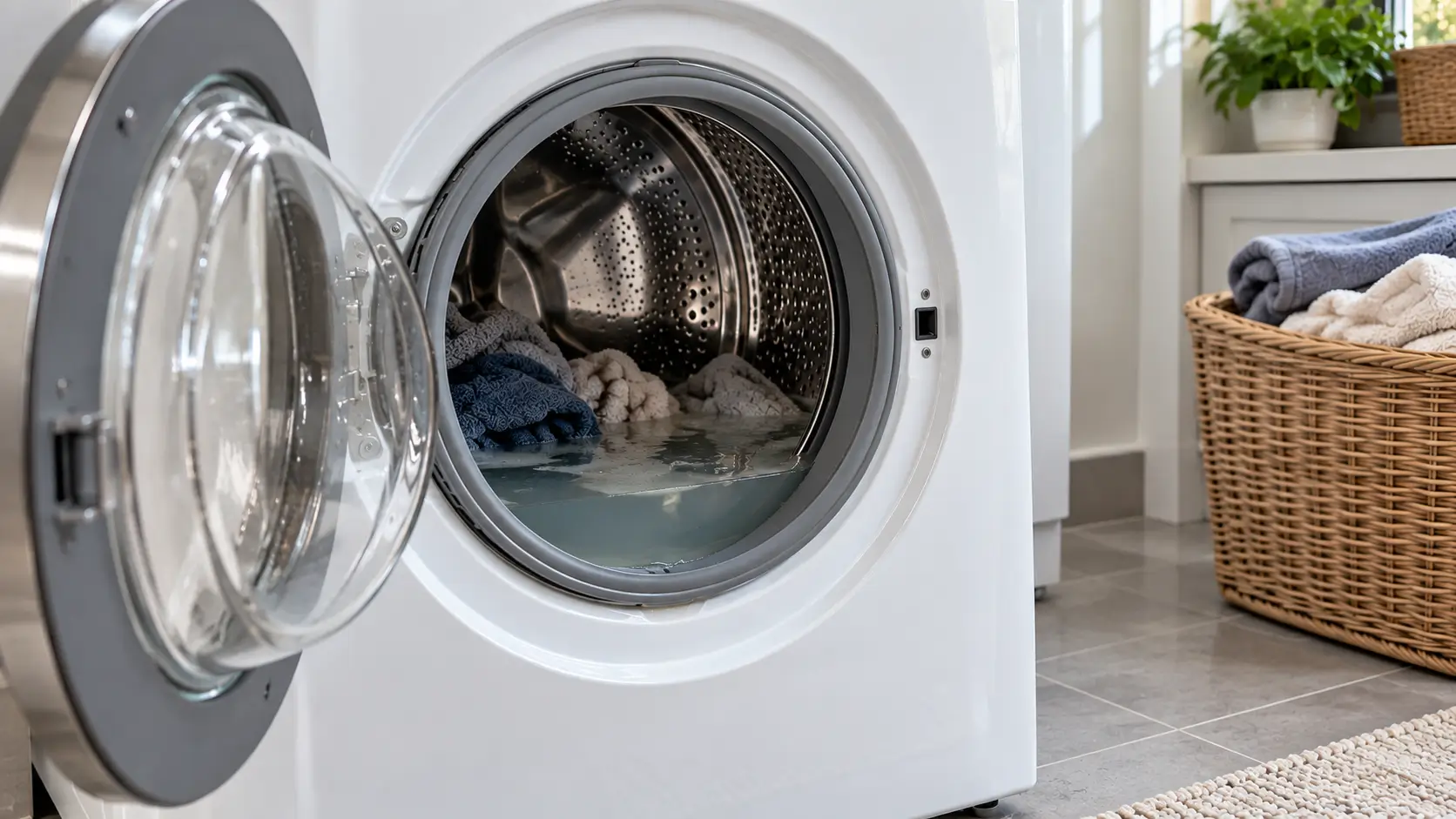
Is there still water sitting in your washing machine after the cycle should have finished? If your washing machine is not draining in Toronto, the cause could be something fairly simple, such as a clogged filter or kinked hose. In some cases, though, the drain pump or another internal component may need attention.
Before you book a repair, there are a few things worth checking yourself. Below, we'll go through the common reasons a washer won't drain, what you can safely look at, signs that the drain pump may be involved, and what can affect the cost of washing machine repair in Toronto.
📌 Key Takeaways
- A blocked pump filter or drain hose can leave water sitting inside the washer.
- Small items such as socks, coins, or buttons can sometimes block the drainage system.
- A jammed or failing drain pump may need professional repair or replacement.
- When a washer cannot drain properly, it may also stop before the spin cycle.
- Repair costs vary depending on the problem, parts, labour, and washer model.
Why Is My Washing Machine Not Draining?
When a washing machine won't drain, it means the water is not being pumped out of the drum as it should. A restriction in the filter, drain hose, or pump is often responsible, although an electrical or mechanical problem can cause similar symptoms.
You may notice that the washer drains very slowly, leaves the drum full of water, or stops partway through the cycle. Sometimes the pump can also make a humming or unusual noise while the water level barely changes.
Common Reasons a Washer Won't Drain
1 The Pump Filter Is Blocked
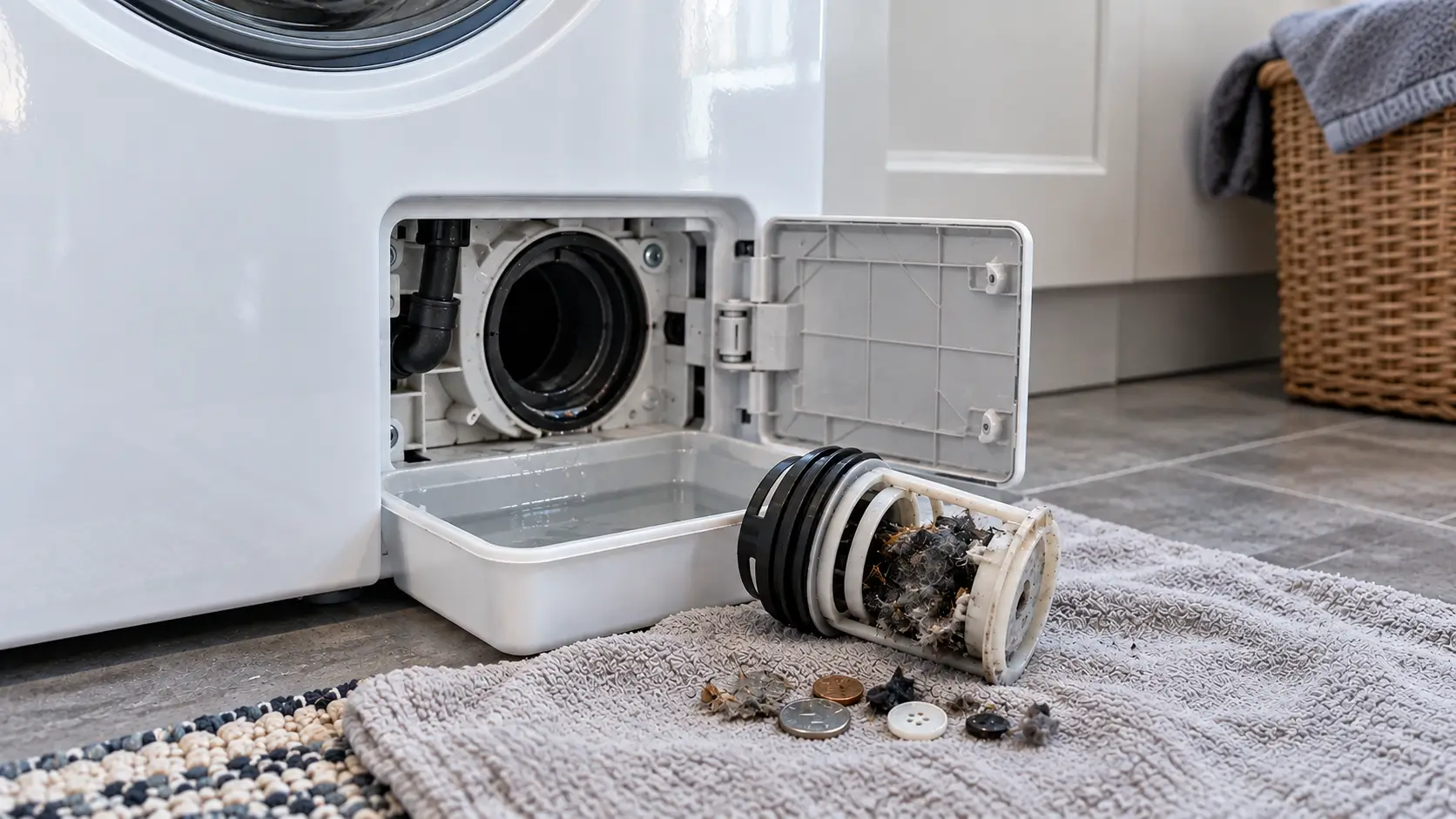
Many front-load washers have a pump filter that catches things such as lint, coins, hair, and other small debris. Over time, that filter can become clogged enough to slow down or completely stop drainage.
If your washer has an accessible pump filter, check the owner's instructions before opening it. There may be quite a bit of water behind the filter, so have a container and some towels ready before you start.
2 A Sock, Coin, or Other Object Is Blocking the Pump
It is surprisingly easy for a small item to end up in the washer's drainage system. A sock, coin, button, or similar object can restrict the pump or stop its impeller from turning properly.
You may notice standing water, slow drainage, or a humming sound from the washer. The cycle may also stop before it reaches the final spin.
3 The Drain Hose Is Kinked or Restricted
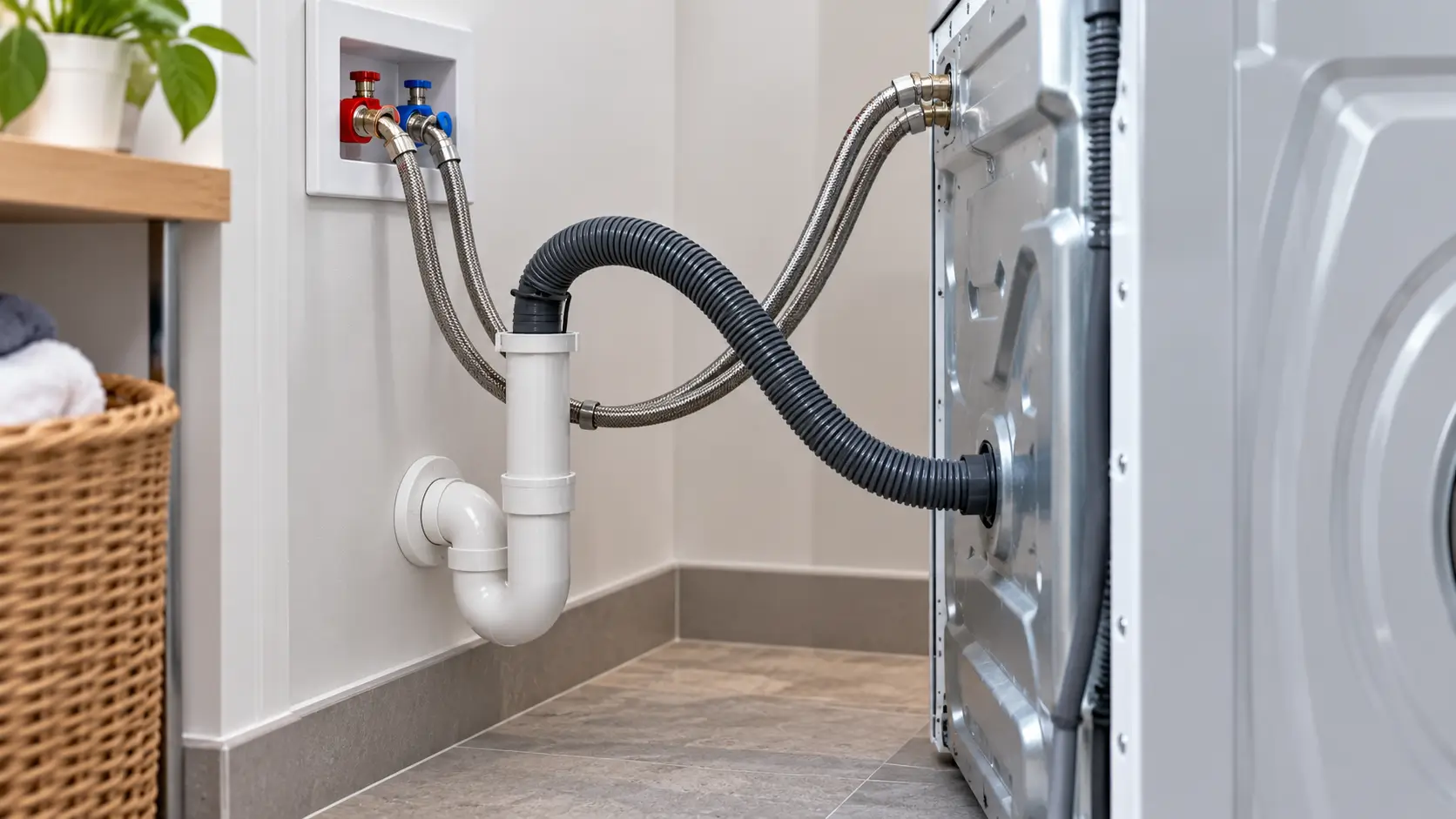
Take a quick look behind the washer. If the drain hose is sharply bent, crushed against the wall, or otherwise restricted, water may not be able to leave the machine properly.
If the visible part of the hose looks fine but the washer still won't drain, the restriction could be farther inside the drainage system.
4 The Drain Pump Is Jammed or Failing
The drain pump moves wastewater out of the washing machine. If debris gets caught in it, the pump can become jammed. A worn or failed pump motor can cause the same basic symptom: the washer finishes part of the cycle but leaves water behind.
A humming, buzzing, or grinding sound can sometimes point toward a pump problem. It is not proof on its own, though, because a blockage elsewhere can create similar noises.
5 A Lid Switch or Door Lock Problem
Depending on the washer, the lid switch or door-lock system helps confirm that the lid or door is safely closed before certain parts of the cycle can run.
If the washer does not detect the closed lid or door correctly, it may not continue with draining or spinning as expected.
6 Drain Hose Installation or Positioning Problem
If the washing machine was recently moved, installed, or reconnected, take a closer look at the drain hose. Incorrect positioning or a poor connection can restrict drainage or allow water to flow back toward the washer.
This is particularly worth checking if the drainage problem started soon after the appliance was moved or reinstalled. Compare the hose setup with the installation instructions for your specific washer.
What Can You Check Before Calling for Repair?
If there is water left in the drum, start with the simple things. A few basic checks may help you narrow down what is happening:
- Stop and unplug: Stop the washer and unplug it before inspecting any accessible components.
- Inspect the drain hose: Look behind the appliance and make sure the drain hose is not kinked, twisted, or crushed against the wall.
- Examine the pump filter: If your model has an accessible pump filter, inspect and clean it according to the manufacturer's instructions.
- Check for foreign objects: Check for visible debris (coins, hairpins, bra wires) that could be restricting the drainage path.
- Test the drain cycle: Once the checks are complete, test the drain or spin cycle if it is appropriate for your washer.
For model-specific instructions, your owner's manual or the manufacturer's support documentation is the best place to start.
If those basic checks don't solve the problem, a technician can inspect the drainage system and determine whether the washer needs a cleaning, adjustment, component repair, or replacement part.
Why Won't My Washer Spin When There Is Water Inside?
If there is still water in the drum, it is normal for some washing machines to prevent or limit the spin cycle. The washer may need to drain first before it can safely move into a high-speed spin.
So if your washer won't spin and you also find standing water inside, the drainage system is a good place to start. Checking the hose, filter, and pump can help narrow down the issue.
How Can You Tell If the Drain Pump Is the Problem?
One clue is when you can hear the washer trying to drain, but the water is barely moving. Standing water combined with repeated drainage errors or unusual humming and grinding noises can also point toward the pump.
That said, these symptoms do not automatically mean the pump needs to be replaced. A blocked filter, restricted hose, wiring issue, or another drainage problem can look very similar.
Proper testing is the best way to find out whether the drain pump itself is actually at fault.
When Should You Get Professional Washer Repair?
If your washer continues to hold water after the basic checks, repeatedly shows a drainage error, or makes unusual pump noises, it may be time to have it inspected.
Professional help is also a good idea if you are not comfortable opening the washer or working around its internal components. A proper diagnosis can help determine whether you are dealing with a simple blockage or a part that needs repair or replacement.
How Much Does Washing Machine Repair Cost in Toronto?
There isn't one fixed price for a washer that won't drain. The cost depends on what is actually causing the problem, the washer model, the parts involved, and the labour needed to complete the repair.
For example, clearing a blocked filter or removing a foreign object can be a very different job from replacing a failed drain pump. The exact cost should be clear after the problem has been diagnosed.
Before approving a repair, it is reasonable to ask what caused the problem, whether a replacement part is needed, what labour is included, and whether the repair comes with any applicable warranty.
Appliance Repair Knights Pricing Policy: We currently offer flat-rate, upfront pricing and waive the diagnostic service-call fee when you proceed with the repair.
Washing Machine Repair in Toronto & the GTA
Appliance Repair Knights provides washing machine repair across Toronto and surrounding GTA communities. See all appliance repair service areas to check coverage in your city.
Same-day service may be available depending on technician availability and scheduling. If your washer is holding water, draining slowly, or stopping before the spin cycle, getting the problem checked can help get the appliance back to normal.
If the issue needs professional attention, you can get washer repair in Toronto from Appliance Repair Knights.